


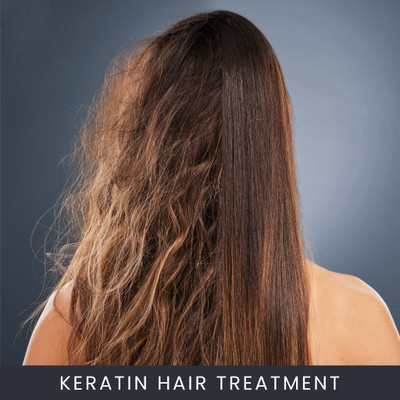
What Could Go Wrong? Common Side Effects of Keratin Treatments and How to Avoid Them
PURE KERATIN on 10th Jul 2026
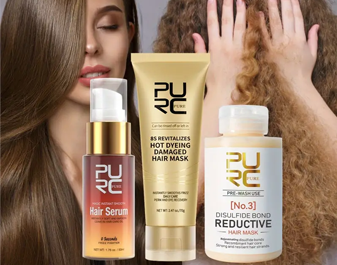
What Could Go Wrong? Common Side Effects of Keratin Treatments and How to Avoid Them
Keratin treatments have become one of the most popular salon services for reducing frizz, adding shine, and making hair easier to manage. While millions of people enjoy smoother hair for months, it's important to understand that every chemical hair treatment comes with potential risks.
The good news is that most keratin treatment side effects are preventable. Choosing a high-quality professional formula, following proper aftercare, and working with an experienced stylist can significantly reduce the chances of damage.
This guide explains the most common side effects of keratin treatments, why they happen, how to avoid them, and whether there are healthier alternatives.
Quick Answer
A professional keratin treatment is generally safe for healthy hair when performed correctly. Most side effects result from poor application, excessive heat, formaldehyde exposure, or improper aftercare—not from the keratin protein itself.
Common Side Effects of Keratin Treatments
1. Dry Hair
Some people notice their hair feels drier several weeks after treatment. This usually happens because the high temperatures used during sealing can remove some moisture from the hair shaft.
How to prevent it:
- Use sulfate-free shampoo.
- Deep condition weekly.
- Avoid excessive heat styling after the treatment.
- Use professional keratin aftercare products.
2. Hair Breakage
Hair that is already bleached, chemically processed, or fragile is more susceptible to breakage after a keratin treatment.
The treatment itself is rarely the only cause. More often, multiple chemical services combined with high heat weaken the hair over time.
How to prevent it:
- Don't perform keratin immediately after bleaching.
- Allow damaged hair to recover first.
- Reduce flat iron temperature when possible.
- Trim split ends regularly.
3. Scalp Irritation
Some clients experience temporary itching, redness, or sensitivity during or immediately after the treatment.
This is usually linked to the chemicals or fumes rather than the keratin itself.
How to prevent it:
- Ask for a patch test before treatment.
- Avoid treatment on irritated scalps.
- Choose a well-ventilated salon.
- Select formaldehyde-free formulas whenever possible.
4. Eye and Respiratory Irritation
Certain keratin treatments release formaldehyde or formaldehyde-releasing compounds when heated. These fumes may irritate the eyes, nose, throat, and lungs.
This is one of the biggest safety concerns highlighted by dermatologists and health experts.
How to prevent it:
- Choose formaldehyde-free products.
- Ensure proper salon ventilation.
- Avoid inhaling fumes during the service.
- Work with experienced professionals.
5. Hair Becoming Flat
While many clients love smoother hair, some are surprised that their natural volume or curls become temporarily looser.
This isn't damage—it is simply the smoothing effect of the treatment.
6. Color Fading
If your hair is color-treated, a keratin treatment may slightly affect your hair color, especially lighter blonde shades.
Most professionals recommend coloring hair before your keratin appointment rather than immediately afterward.
Who Is Most at Risk?
You should be extra cautious if you have:
- Severely bleached hair
- Extremely dry hair
- Elastic or gummy hair
- Previous chemical damage
- Scalp conditions
- Sensitivity to chemical fumes
How to Reduce the Side Effects of Keratin Treatment
The majority of complications are preventable with proper preparation and aftercare.
- Choose a professional salon with experienced stylists.
- Select high-quality keratin products.
- Prefer formaldehyde-free formulas whenever available.
- Follow all aftercare instructions carefully.
- Wash with sulfate-free shampoo only.
- Use moisturizing conditioners and masks regularly.
- Avoid frequent swimming in chlorinated pools.
- Protect hair from excessive heat styling.
- Wait at least three to six months before repeating treatment.
Keratin Treatment Aftercare Matters More Than Most People Realize
The longevity and health of your hair depend just as much on aftercare as the treatment itself.
Proper aftercare helps:
- Maintain smoothness longer
- Prevent dryness
- Reduce breakage
- Protect shine
- Extend treatment lifespan
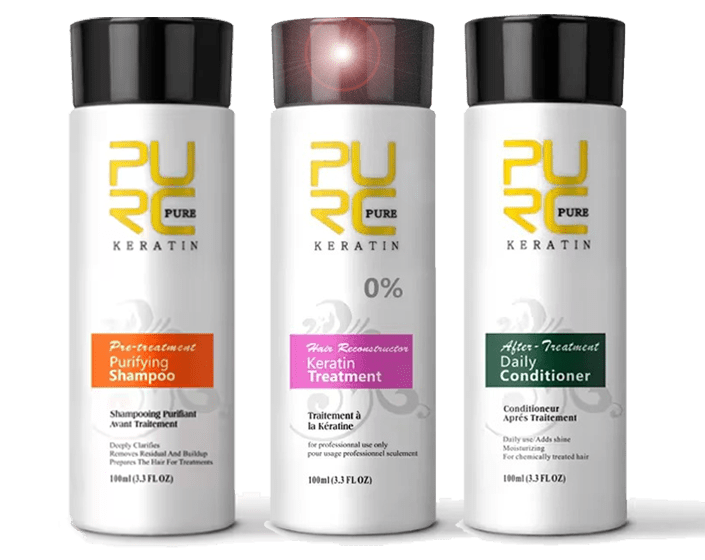
At Pure Keratin, we offer professional sulfate-free shampoos, conditioners, masks, and maintenance products specifically designed to maximize keratin treatment results while keeping hair healthy.
Is There a Healthier Alternative to Traditional Keratin Treatments?
Yes. Not every smoothing treatment uses the same ingredients.
Modern options include:
- Formaldehyde-free keratin treatments
- Amino acid smoothing treatments
- Cysteine hair treatments
- Protein smoothing systems
- Deep conditioning keratin masks for temporary frizz control
If your primary goal is healthier-looking hair rather than maximum straightness, these alternatives may provide a better balance between smoothing and hair integrity.
Should You Avoid Keratin Treatments Altogether?
Not necessarily.
Professional keratin treatments remain one of the most effective methods for reducing frizz and simplifying styling. However, they are cosmetic smoothing treatments—not hair repair treatments.
If your hair is already severely damaged, focus on restoring its health before considering another chemical service.
Why Choose Pure Keratin?
Choosing the right products makes a significant difference in both results and hair health.
For more than 30 years, Pure Keratin has helped customers achieve smoother, healthier-looking hair with professional-quality products trusted by salons and home users alike.
Our advantages include:
- Over 200 professional hair care products
- Competitive pricing
- Trusted by customers worldwide
- Professional keratin treatment systems
- Sulfate-free maintenance products
- Expert support before and after purchase
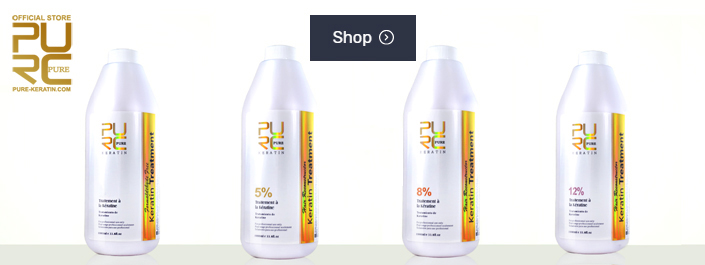
Browse our complete collection of keratin treatments and aftercare products to keep your hair smoother for longer.
Frequently Asked Questions
How to reduce side effects of keratin treatment?
- Choose a professional stylist.
- Use formaldehyde-free formulas whenever possible.
- Wash only with sulfate-free shampoo.
- Deep condition weekly.
- Avoid excessive heat styling.
- Wait several months before repeating the treatment.
- Follow all salon aftercare instructions.
Is there a healthier alternative to keratin treatment?
- Formaldehyde-free keratin systems.
- Amino acid smoothing treatments.
- Cysteine treatments.
- Protein-based smoothing treatments.
- Professional keratin masks for temporary smoothing.
Why shouldn't you do keratin treatment?
- Your hair is severely damaged or breaking.
- You have a sensitive scalp.
- You are sensitive to chemical fumes.
- You recently bleached or chemically processed your hair.
- You want to preserve tight natural curls.
What should you avoid after a keratin treatment?
- Sulfate shampoos.
- Clarifying shampoos.
- Frequent swimming in chlorinated water.
- Excessive heat styling.
- Overwashing your hair.
- Repeating treatments too frequently.
Final Thoughts
Keratin treatments are highly effective for reducing frizz and improving manageability, but understanding the potential side effects helps you make an informed decision. Most problems can be avoided by selecting quality products, choosing an experienced stylist, and following proper aftercare.
If you're looking for professional keratin treatments and expert maintenance products designed to keep hair healthier for longer, explore the complete collection available at Pure-Keratin.com.